In high-load marine environments—oil terminals, LNG berths, and ship-to-ship (STS) operations, berthing is not a passive event. It is a controlled energy transfer problem.
When large vessels approach a jetty or another vessel, the kinetic energy generated must be safely absorbed. Failure to manage this correctly results in hull damage, structural stress on berths, operational downtime, and significant financial exposure. This is one reason why Pneumatic fenders specifications must always be considered.
What Are Pneumatic Fenders?
Pneumatic fenders are air-filled, floating rubber fender systems that absorb berthing energy through controlled compression. They operate under the principles defined in ISO 17357, which governs performance, material integrity, and testing.
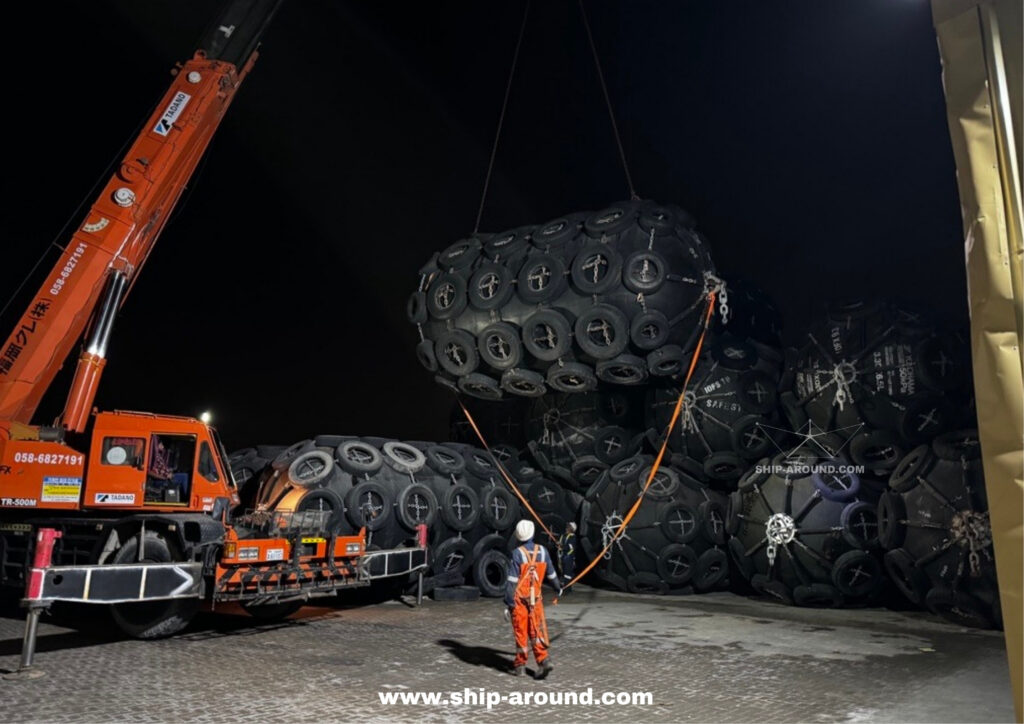
Unlike fixed or solid fender systems, pneumatic fenders:
- Distribute load evenly.
- Maintain low reaction force.
- Adapt dynamically to tidal and operational changes.
Types of Pneumatic Fenders:
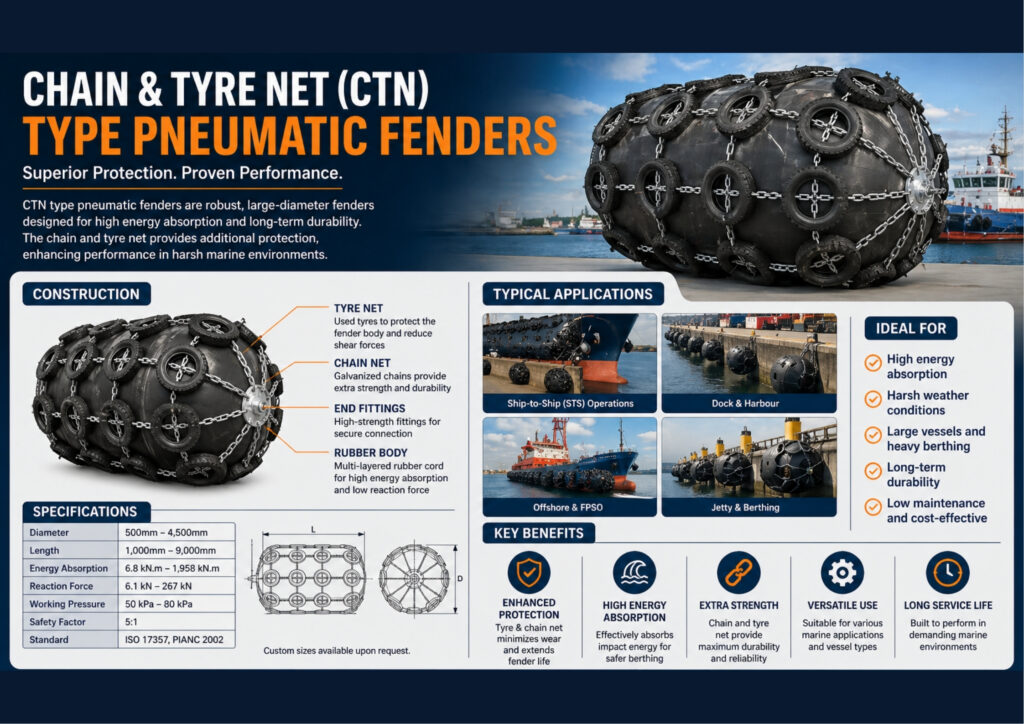
- Reinforced with chains and tyres.
- High abrasion resistance.
- Preferred for oil & gas terminals and offshore STS operations.
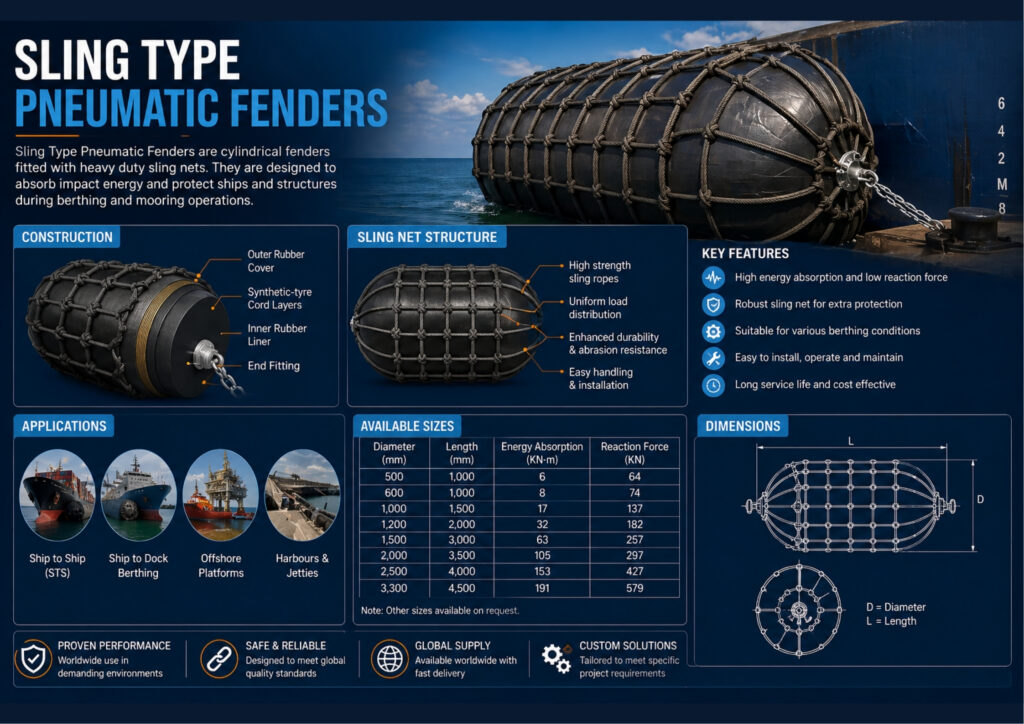
- No external net.
- Lower weight, easier handling.
- Suitable for ports and lower-impact berthing.
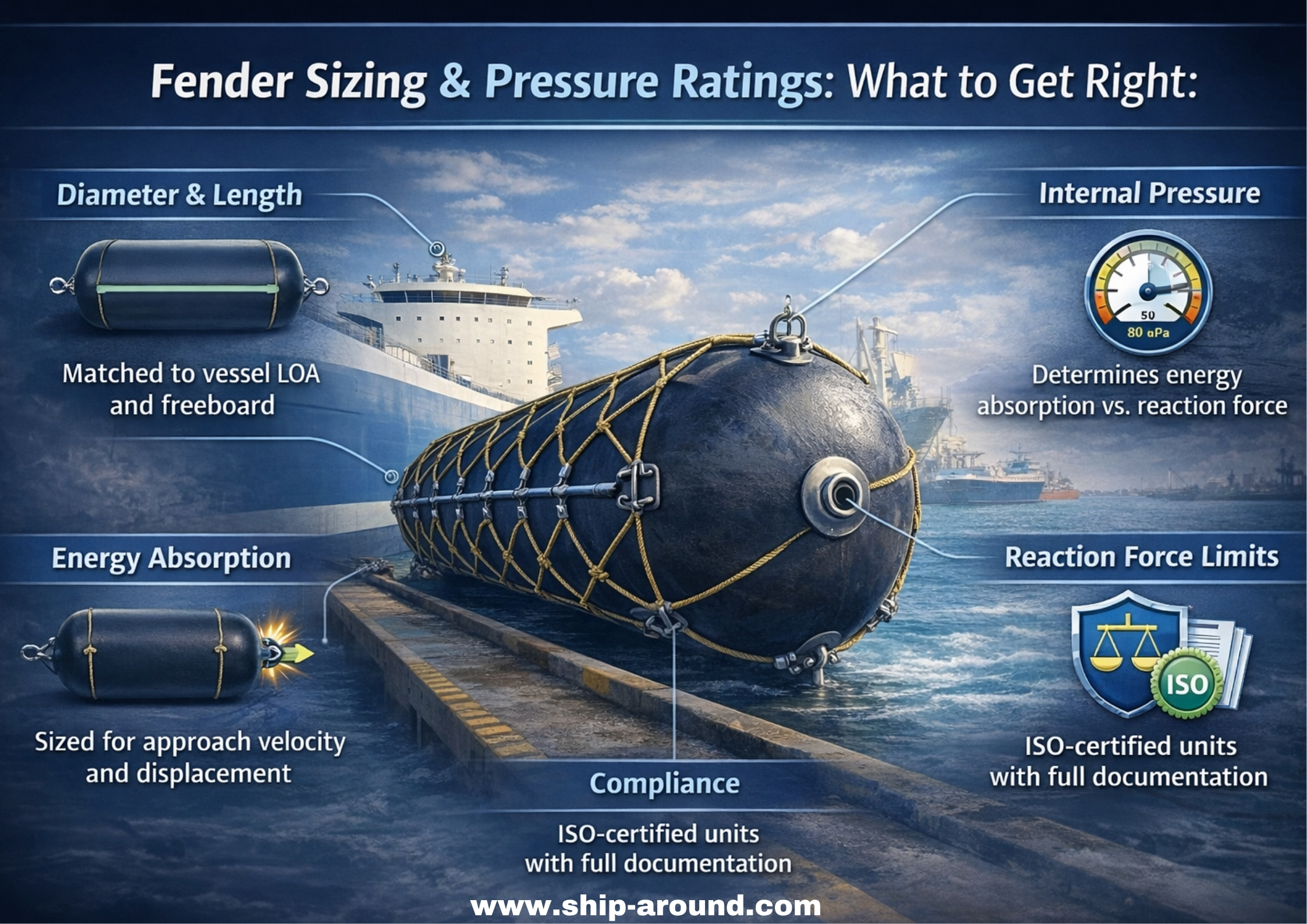
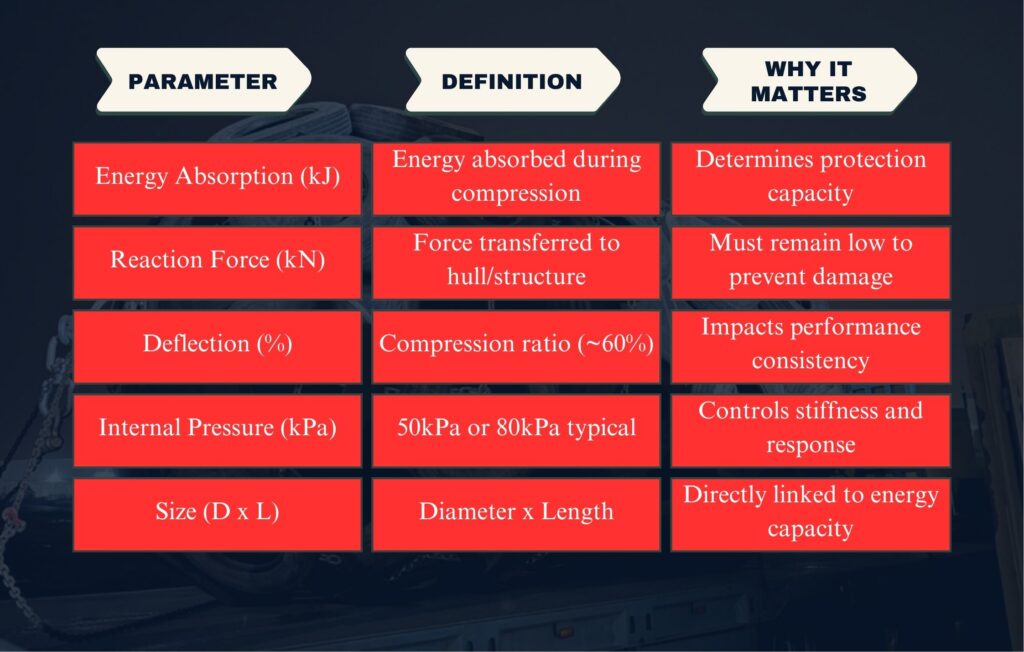
Key Technical Specifications of Pneumatic Fenders.
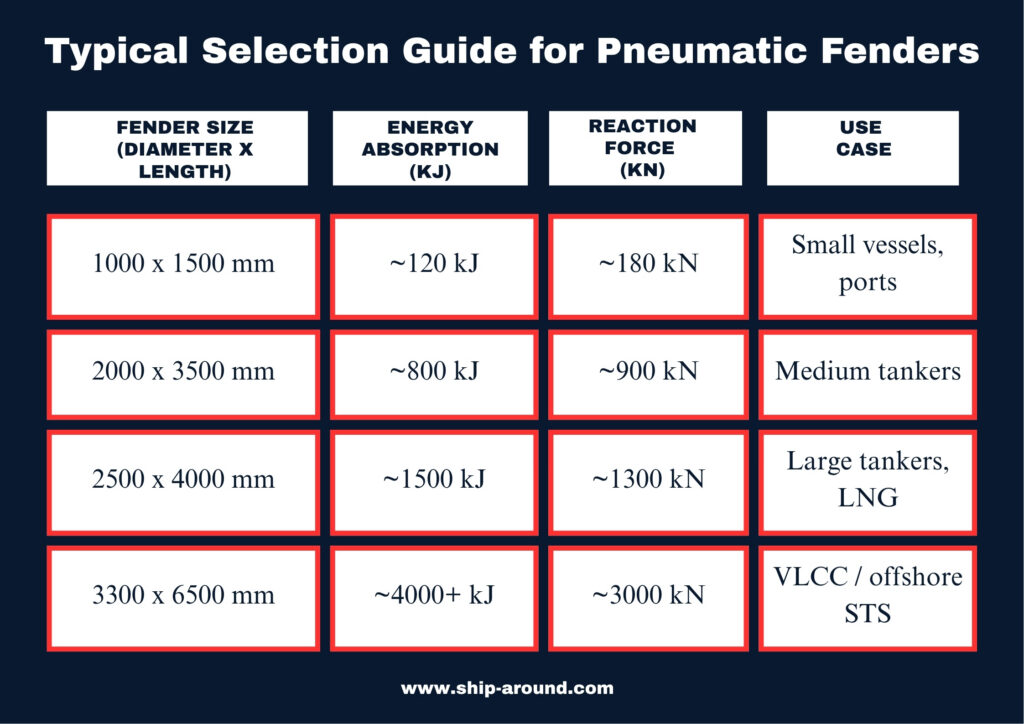
Pneumatic Fenders Specifications and Sizing Examples.
Selection Criteria (Engineering + Procurement).
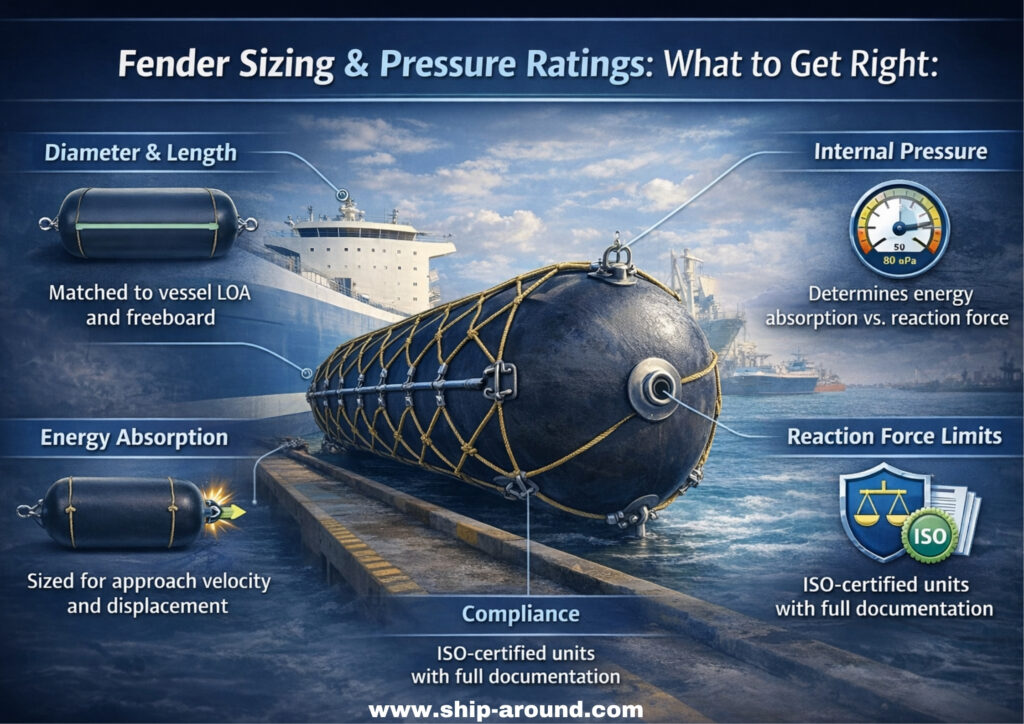
Compliance and Standards
A correct selection requires alignment of:
- Vessel displacement, size, and berthing velocity.
- Environmental conditions and compliance requirement.
- Fender spacing and layout.
- Frequency of operations.
The baseline requirement is ISO 17357, covering:
- Performance testing.
- Material quality.
- Pressure validation.
- For STS operations, alignment with OCIMF guidelines is also critical.
Mistakes here lead directly to underperformance or over-spec cost inefficiency.
Procurement Strategy: Speed vs Compliance.

In real operations, procurement is often time-constrained.
However, speed without verification introduces risk.
Through Ship-Around, operators and terminal teams can source ISO-certified pneumatic fenders built for controlled energy absorption during vessel approach and alongside operations. Access:
- Verified global suppliers
- Full technical datasheets
- Performance comparisons
- Compliance documentation
Procurement typically requires Energy Absorption (kJ) and Reaction Force (kN) to match vessel size and berthing velocity. Diameter (mm), Length (m), and for non-cylindrical types Height (mm) and Width (mm), material specifications, and end-fitting type are critical for installation compatibility. Year of manufacture is often specified, as rubber properties degrade over time, affecting performance and safety margins. Request a quote on Ship-Around to secure ISO-compliant pneumatic fender solutions aligned to your vessel class, terminal conditions, and operational timelines.